

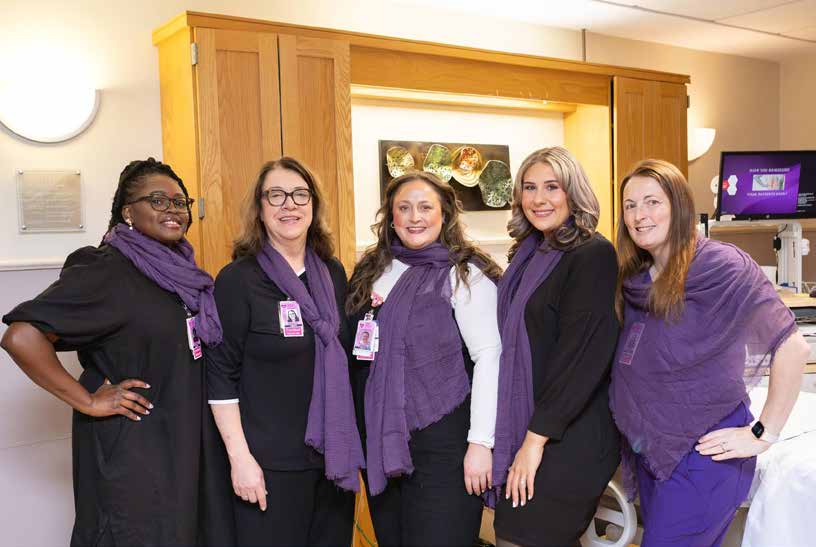
Today, the obstetrics and gynecology practice at Auburn Community Hospital is growing and thriving while it meets the wide-ranging needs of women in Cayuga County. However, there was a time not too long ago when the very existence of the program was threatened. Scott Berlucchi, President and CEO of Auburn Community Hospital, explained that shortly after he joined the organization in 2007, the New York State Regulatory Agency recommended the hospital cut down to 99 total beds and the hospital obstetrical services had to close. Downsizing made sense, Berlucchi said, but he strongly felt shutting down OBGYN care would have severe negative consequences on patients.
“I just said, ‘I can’t do this. It’s not the right thing to do.’ The women of our community are geographically isolated,” said Berlucchi, adding that the nearest hospital for obstetrical services is Community Hospital on Onondaga Hill, a drive that can sometimes take upward of an hour and a half from Auburn. “I believe what you do for the women and children of your community speaks volumes about who you are as a hospital, and about who you are as a healthcare leader.”
 Berlucchi had previously worked for Lancaster General Hospital in Lancaster, Pennsylvania and had come to understand how important OBGYN care is for women in rural and underserved populations. “I know what it’s like to be geographically separated from a maternity center,” he explained. Berlucchi partnered with Crouse Hospital to maintain obstetrical services at Auburn Community Hospital.
“Within those five years, we received regional awards for creativity in rural health and women’s care including the Regional Perinatology Award for developing comprehensive OBGYN care in a rural area. We were successful, and today we have over 400 deliveries annually and we’re on our way to 500 deliveries. Our quality scores have really knocked it out of the park,” Berlucchi said.
A Growing Team of Providers
As the OBGYN practice at ACH continues to expand and evolve, new faces have joined the team providing high-quality healthcare to women in the community. In January of 2026, Migdalia Zoe Bonilla Martir, MD, FACOG joined 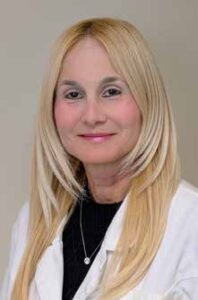 ACH as Chief of Obstetrics and Gynecology. A primary reason she decided to join ACH is the small-town community feeling where she can grow meaningful relationships with patients.
“It’s different from the big hospitals. Everybody has the opportunity to interact with the patients here,” said Dr. Bonilla-Martir, who had previously been with Vassar Brothers Medical Center in Poughkeepsie, NY. “It’s cozy, it’s nice. Taking care of the patients and delivering their babies, you feel like you’re a part of their family.”
 Dr. Bonilla-Martir explained that she also felt drawn to ACH because the obstetrics and gynecology programs are integrated, and that while some complicated cases may need to be referred out to providers in Rochester or Syracuse, they are able to take on many high-risk patients as well as normal pregnancies.
“This is an advantage for the patients in the community,” Dr. Bonilla-Martir stated. “They don’t need to travel so far away to get the care that they need. We are able to take care of high-risk patients and difficult situations, and that’s definitely a plus for the community.”
Dr. Bonilla-Martir shared that another physician, Farkad Balaya, MD, has been seeing patients at ACH and recently joined the team as a full-time OBGYN provider and as the Assistant Chair of the department.
 “Many patients love Dr. Balaya,” said Dr. Bonilla Martir. “As of the beginning of April, he has become a full time physician with us and will be helping us continue to deliver the high-quality care that women in the community need.”
Dr. Bonilla-Martir and Dr. Balaya were recently joined in the practice by Dr. Francis Finneran, an Albany Medical College graduate who completed residency and fellowship at Tulane Medical Center and is highly respected for his skills and integrity.
Big-Picture Women’s Healthcare Through Midwifery
 Another stand-out aspect of the team of OBGYN providers at ACH is the personalized care provided by the staff of midwives. Jennifer MacBlane, CNM, had been coming to ACH on and off for several years before joining the team full time in August of 2025. She echoed the sentiments of her colleagues when it comes to the small community feel of ACH and of the wider Auburn community.
“I grew up in the Liverpool area of Syracuse and it was a large community. Something about Auburn draws me, and it’s not just the quaintness of the town. Everyone is friendly. Everyone seems to know each other,” MacBlane said. “it’s just a nice, strong, tight-knit community.”
The team of several full-time midwives and a few per-diem midwives is a unique aspect of OBGYN care at ACH, and it allows the practice to offer midwifery coverage at the hospital 24 hours per day, seven days per week. MacBlane explained that midwives offer a slightly different approach to obstetrics and women’s healthcare.
 “The word ‘midwife’ means ‘with woman.’ The whole idea is that we’re with them to help them and develop whatever they need,” MacBlane said. “It’s all-encompassing. Midwives kind of look at the big picture, so we include everybody – your family, your social history, your medical history. We put it all together. It’s a really nice, unique experience because you get a little bit of the warm and fuzzy, but we also do the medical side. We can get you medicine, lab work, testing, we can get you an epidural – we’re qualified to do that. We just look at it a little differently, and we work a little closer with the patient while they’re in labor.”
While midwives primarily work with low-risk patients, MacBlane said she and the other midwives at ACH still work closely with physicians to co-manage high-risk cases as a cohesive team.
 “We work together as a group,” shared MacBlane. “Midwives are independent in New York State, but we work together with the physicians to kind of cover our patients and determine the plan for their care collaboratively, which is really nice.”
Francis Finneran, MD, also emphasized the way the team works together to provide a high level of care for patients.“The patients at ACH receive excellent care that is highlighted by collaboration between physicians, midwives, and nurse practitioners,” said Dr. Finneran. “As a team, we all bring different skills to the table and work together to deliver the highest quality care.”
Investments in Women’s Imaging Services
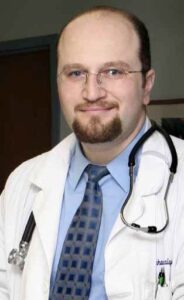
Assisting the team of OBGYN providers at ACH is the comprehensive suite of radiology equipment, which has grown dramatically in  recent years and now includes a dedicated women’s imaging center within the hospital. Jubin Jacob, MD, Chair of Radiology at ACH, highlighted advancements in mammography technology offered to women at ACH, including stereotactic biopsies utilizing mammographic guidance and ultrasound equipment that provides 3D images while keeping radiation doses as low as possible. He emphasized how all the technological advancements offered to women at ACH are aimed at enhancing patient experience.
“Having a dedicated space for women’s imaging helps create a better patient experience. We also make it a priority to report these exams the same day, except when we have to wait for outside prior imaging for comparison. Patients do not need to wait for weeks to months to get their results. We try to accommodate all follow up imaging and biopsies as early as possible, sometimes even the same day,” explained Dr. Jacob.
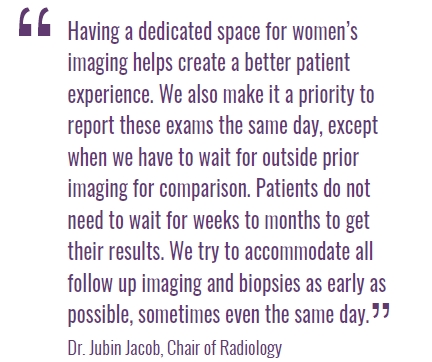 With the opening of the new Interventional Radiology suite and the recent addition of a physician assistant who will primarily work on further expansion of radiology services, Dr. Jacob said several other advanced treatments and procedures are being offered to women at ACH. Examples of these new offerings are minimally invasive procedures to treat symptomatic fibroids, adenomyosis, and pelvic venous insufficiency, as well as curative ablation treatments for breast cancer tumors in patients who are not surgical candidates. In addition, the team has access to the best quality PET scanner in the region.
“Auburn community hospital is well on its way to becoming a major regional medical center, and we are committed to providing excellent care for our patients and this community,” stated Dr. Jacob.
Long-Range Vision for All-Encompassing Women’s Healthcare
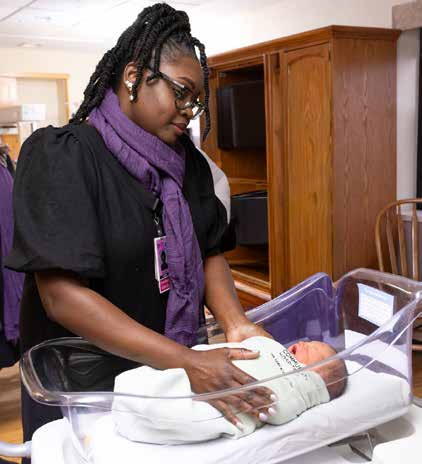 With anticipated changes to the demographics of people in areas surrounding ACH – including a population that’s both aging and also growing due to developments like Micron – Berlucchi is passionate about continuing to expand the OBGYN practice at the health center. Currently in the process of obtaining a grant with the Department of Health, Berlucchi is leading the team toward a vision of comprehensive healthcare for women of all ages including OBGYN and beyond.
“The vision is comprehensive women’s care in Cayuga County. It’s a lot more than just OBGYN. It aims to create a regional center of excellence in women’s health that delivers compassionate, comprehensive, and cutting edge care addressing the full spectrum of women’s health from OBGYN to aspects like specialized women’s care in neurology and cardiology. Our initiatives also address the declining access to highquality and low-cost OBGYN care by overcoming geographic, demographic, and financial barriers,” said Berlucchi.
From saving the OBGYN program at ACH almost 20 years ago to helping to ensure it continues to grow and thrive for the women of today and tomorrow, Berlucchi explained the mindset that keeps it all going. “I have a sense of responsibility to the community that I serve. The history of women in our community – they’re really the backbone,” he said. “We’re all just here to serve. And we just happen to be the right people at the right place at the right time. I simply say, if not now, then when? And if not us, then who?”

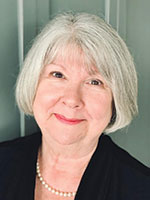 I am an avid reader, belong to two book clubs, and receive a steady stream of great recommendations from my health news feed. Recently, I had the opportunity to read two excellent books by local physician authors: Dr. Mary Jumbelic, retired Chief Medical Examiner of Onondaga County, and Dr. Sarah Matt, surgeon and health technology expert. Two very different books, but both outstanding and musts for your reading list.
 I asked Dr. Jumbelic when she first realized she wanted to write. Throughout her career, she kept journals and notes about her work, not realizing how important they would be later in life. After retiring, she entered a writing contest and then began taking classes, evolving into a seasoned author with an incredible voice that merges technical forensic expertise with deeply personal reflection.
 Dr. Sarah Matt has also drawn on her surgical and technical expertise to write a strategic and highly readable look at the future of technology in health care. A mid-career physician, she has broadened her impact by working across the health technology landscape, including leadership roles with health technology companies and digital health initiatives.

 To safeguard patient care from corporate interference in clinical decisionmaking, New York maintains one of the strictest corporate practice of medicine (“CPOM”) prohibitions in the United States. Under New York law, medical services may be provided only by licensed medical professionals, by professional entities that are owned and controlled exclusively by licensed medical professionals, or by hospitals and other entities expressly authorized under the Public Health Law.